What is perimenopause and when does it start?
Perimenopause is the years-long transition leading up to menopause, and it often begins in a woman’s mid-to-late 40s, sometimes earlier. During this time, hormone levels, especially estrogen and progesterone, start to fluctuate, which can cause symptoms even though periods may still be happening.
Menopause itself is reached when a woman has gone 12 consecutive months without a period, with the average age being 51, according to the American College of Obstetricians and Gynecologists (ACOG).
For many women, the perimenopause phase lasts around 10 years, making it a gradual process rather than a sudden change.
In other words, if things start to feel “off” years before periods stop completely, that’s often perimenopause, and it’s a normal part of the transition.

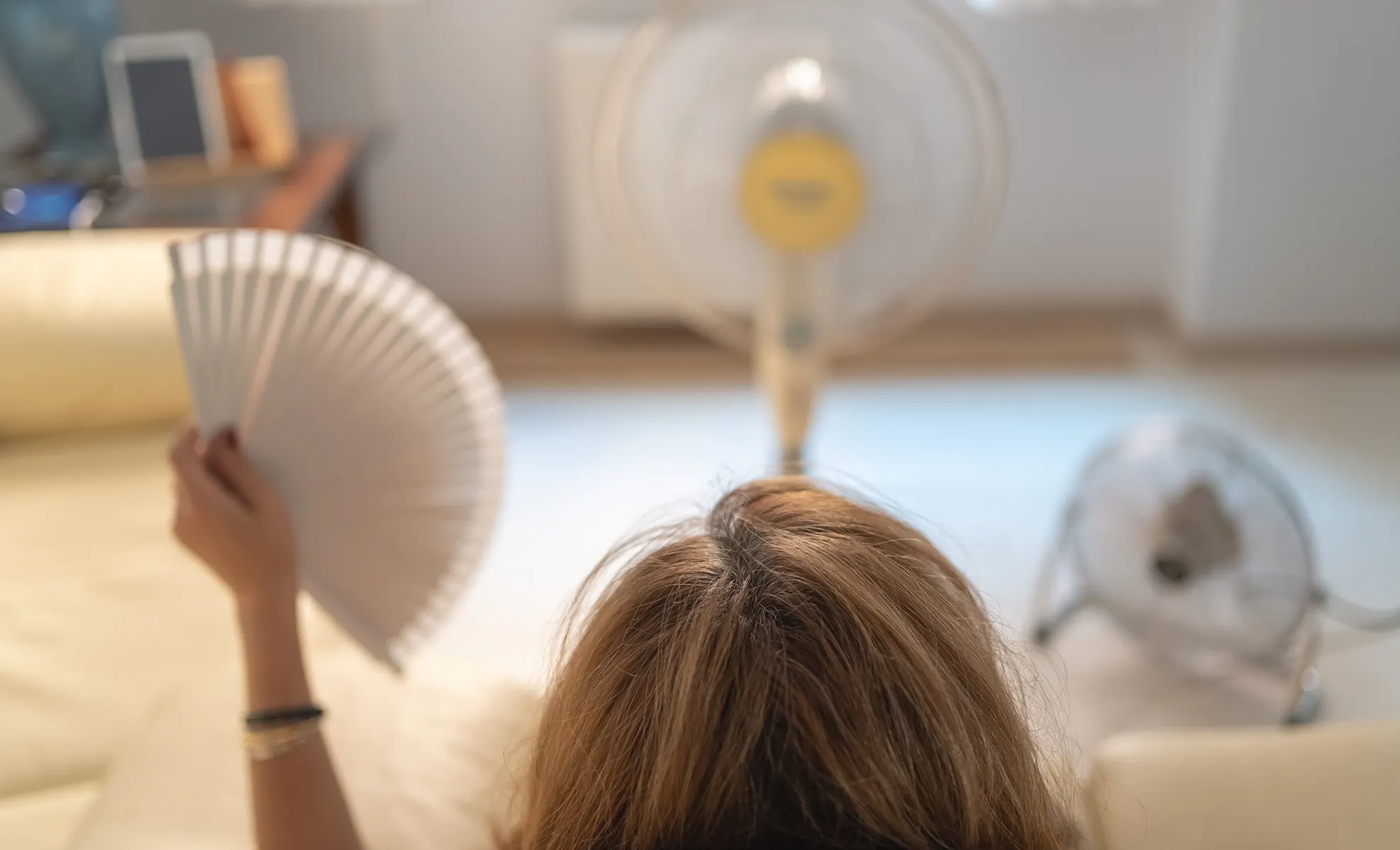
For many women, hot flashes and night sweats can disrupt sleep, work, and everyday routines.